Daycare assessment guide
What a Dog Daycare Temperament Assessment Actually Involves
Every dog who joins group play at Parkwood completes a temperament assessment first. Families sometimes hear the word test and imagine a pass-or-fail exam. It is closer to a structured first visit: the team watches how your dog handles new people, new space and carefully chosen dogs, and uses what it sees to decide how, and whether, to introduce your dog to a group. This guide explains what the team is looking for and how to make the day easier for your dog.
Parkwood Pet Resort · Updated September 27, 2026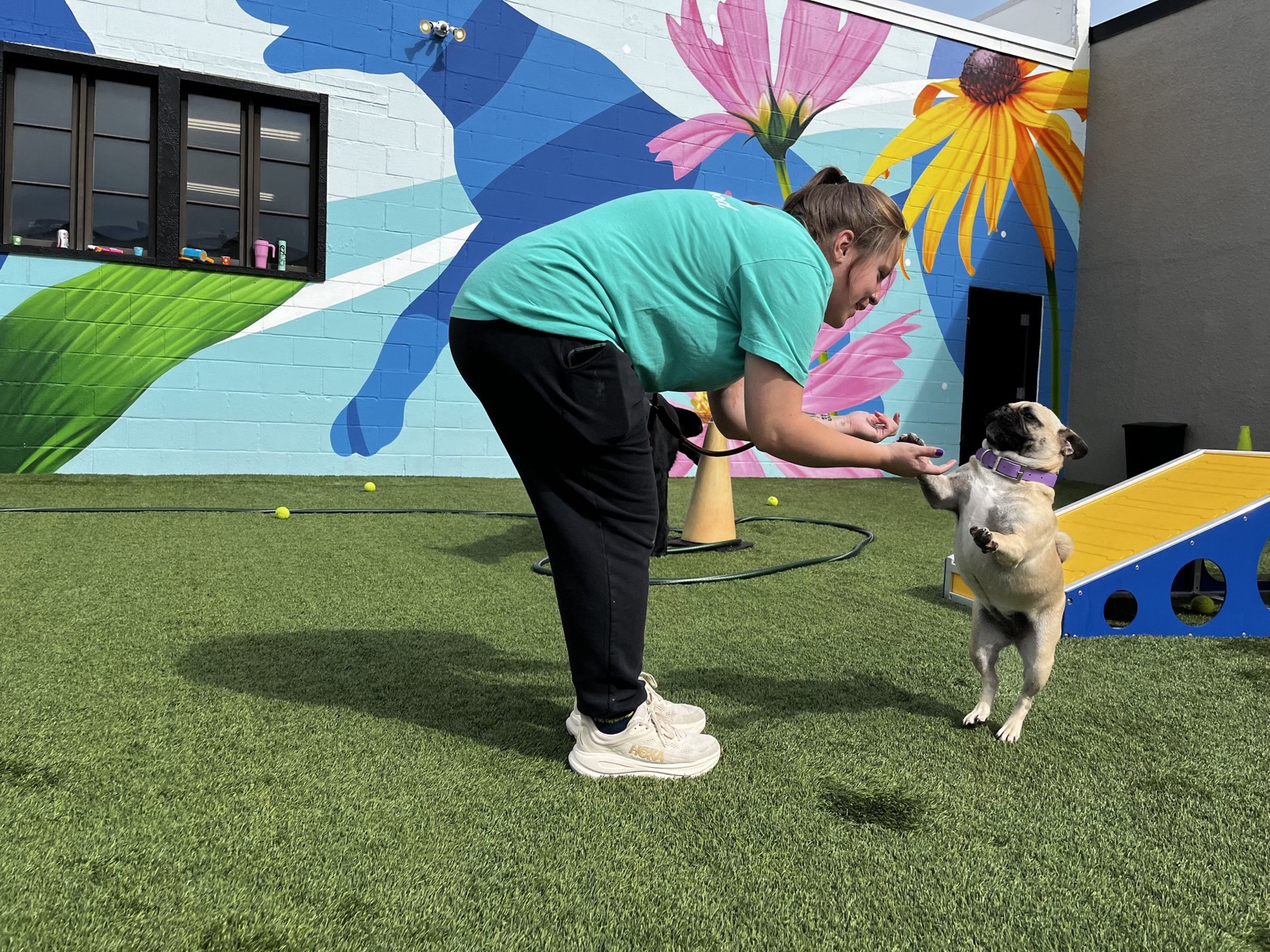
Why the assessment exists
A daycare group is only as safe as the dogs in it. Playgroups at Parkwood are matched by size, energy and temperament, and the team can only match a dog it has observed. The assessment protects your dog from a group that is wrong for it, protects the other dogs from a newcomer who is not ready, and gives the staff a baseline to compare against on later visits.
It also protects you from a bad guess. Many families are surprised in both directions: the dog they worried about settles in quietly, or the dog who loves the park finds a fenced group of strangers harder than expected. Watching the real dog in the real setting, with a team that does this every day, replaces hope with information.
What staff are actually watching
The first thing the team watches is the handoff and the first minutes without you. Does your dog accept a leash from a stranger, tolerate a collar check, and take in the new space, or does it freeze, panic or try to leave? Next comes handling: gentle guidance, a hand on the shoulder, moving through a gate. A dog that cannot be handled by staff cannot be managed safely in a group, however friendly it is.
Then the team introduces one calm, experienced dog, and later a small group, and watches the conversation between them. Good signs are a curved approach, sniffing, a play bow, pauses in play, and a dog that responds to its name or a handler’s interruption. The team is not looking for a social butterfly. A dog who is neutral, watches for a while and then relaxes is a perfectly good result. What raises concern is stiffness that does not soften, targeting a specific dog, or an inability to come down once aroused.
- Greeting and handling: accepts a stranger’s leash, collar touch and guidance.
- Play style: gives and takes, pauses, responds to interruption.
- Arousal and recovery: how high it goes and how quickly it settles.
- Resources: behavior around water, toys, tight spaces and doorways.
- Rest: whether the dog can settle when the group quiets down.
How to prepare your dog, and yourself
Send required health records ahead of time so the visit is not delayed by paperwork, and use the tour to describe your dog honestly: guarding, rough play, fear of men or hats, mouthiness, a past incident, noise sensitivity, anything. The team is not judging you. Detail helps them choose a gentler introduction and read your dog accurately instead of being surprised.
On the day, keep the morning boring. A normal walk, a normal breakfast well before arrival, and a short, unemotional handoff at the lobby. Skip the dog park, the new toy and the long goodbye. If your dog is easier to handle in a flat collar or a particular harness, say so. Bring nothing that will need to be guarded.
What the outcomes mean
Most dogs are introduced to a group that suits them and given a plan: this group, this length to start, this is what we will watch. Some dogs are asked to come back for another short visit before the team commits, often because the first day was tolerable but tiring, or because the dog needs more time to trust the staff. That is not a failure; it is the team declining to rush.
A small number of dogs are told, plainly, that group daycare is not the right setting, at least for now. Reasons can include escalating rather than settling, targeting other dogs, or being so shut down that a group would only make things worse. A good team explains what it saw and what it suggests, which may be a slower plan or a different kind of care. If your dog’s behavior is a concern beyond daycare, your veterinarian can help you find the right next step.
Assessment, trial day and boarding
At Parkwood the assessment sits inside the free tour and trial day that every new family starts with, booked at parkwood.pet/tour. It applies to boarding as well as daycare: a dog who will join group play during an overnight stay is assessed the same way. If you are planning a vacation, do the assessment well before the trip, not the day before, so there is time to adjust the plan if needed.
The assessment is a starting point, not a permanent verdict. Dogs change with age, training and experience, and the team keeps watching on every visit. If your dog’s behavior shifts, or if something changes at home, tell the team; the plan can change with it.
Common questions
Frequently asked questions
Can my dog fail the temperament assessment?
The outcome is a plan rather than a grade. Most dogs are matched to a suitable group; some are asked to return for another short visit; a few are told honestly that group play is not the right setting for now, with reasons and alternatives.
What does the team look for?
How your dog handles a stranger’s leash and gentle handling, how it greets and plays with a calm dog and then a small group, how quickly it settles after excitement, behavior around toys and tight spaces, and whether it can rest.
Does my shy dog need to be friendly to pass?
No. A dog that is neutral, hangs back and relaxes over time is a fine result. The concern is a dog that stays stiff, targets other dogs, or cannot come down once aroused.
Is the assessment required for boarding too?
Yes, for any dog joining group play during a stay. Complete it well ahead of a trip. New families start with the free tour and trial day at parkwood.pet/tour; required health records are needed before group play.
Confirm services with the right Parkwood location
Use our published service and location details to plan your questions. Confirm current availability, pricing and your dog’s eligibility with the resort before booking.
Keep planning